Robotic Pool Cleaners for Florida Pools: Costs, Types & Buying Tips
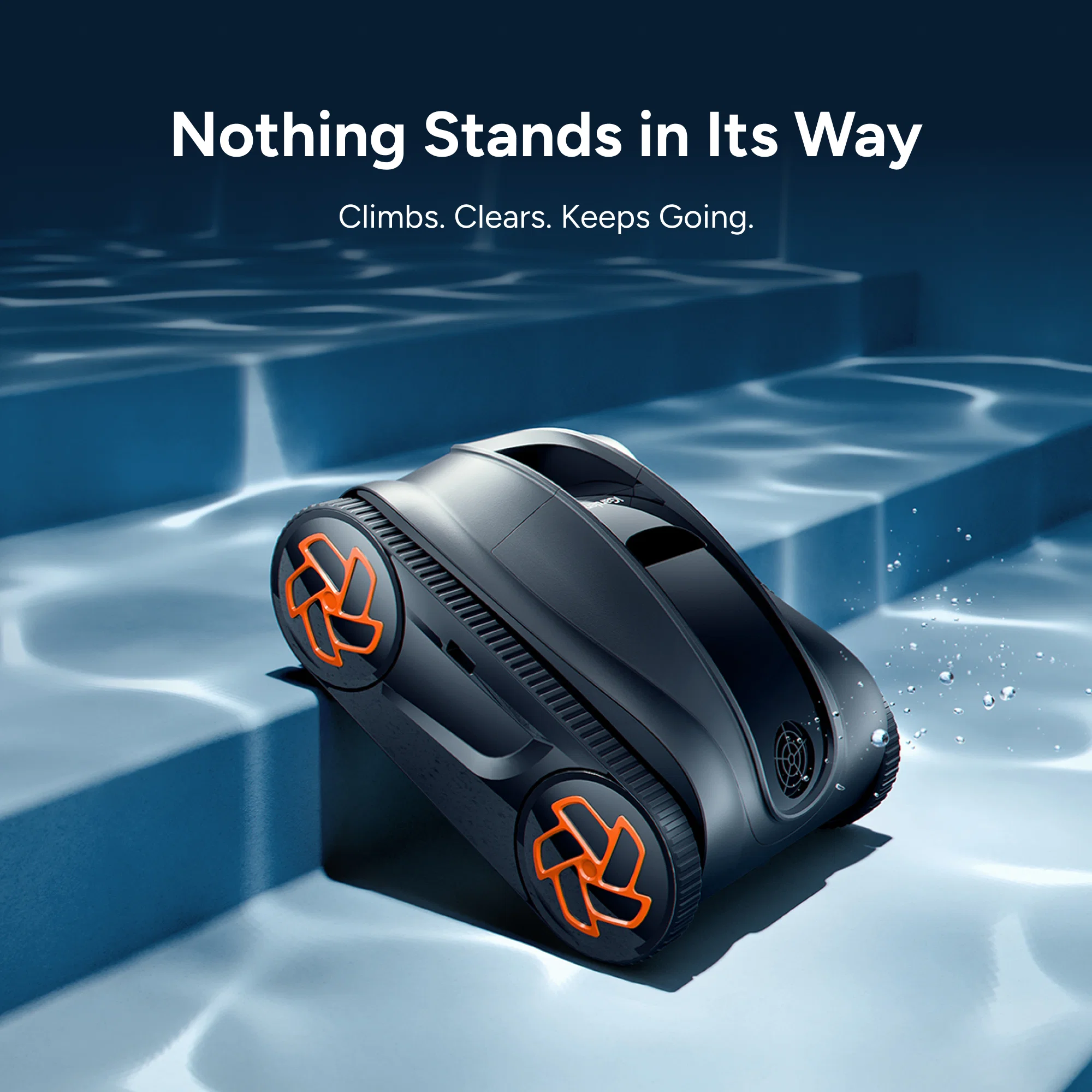
Robotic Pool Cleaners for Florida pools can definitely make your life easier. Pollen coats the water in spring, oak leaves and palm fronds drop year-round, afternoon storms dump debris and dirt, and algae is always waiting for a chance. Skimming and brushing by hand gets old fast, which is why robotic pool cleaners have become one of the most popular upgrades for Florida pool owners.
This guide explains how robotic pool cleaners work, what they cost, how to choose the right one for your pool, and how to keep it running for years in Florida’s heat and sun.
What Is a Robotic Pool Cleaner?
A robotic pool cleaner is a self-contained, motorized unit that drives itself around your pool, scrubbing the floor (and often the walls and waterline) while collecting debris in its own filter. Unlike older cleaners, it doesn’t depend on your pool’s pump or filtration system. You drop it in, start a cycle, and take it out when it’s done.
Robotic vs. suction-side vs. pressure-side
| Type | How it works | Pros | Cons |
|---|---|---|---|
| Robotic Pool Cleaners | Own motor and filter, runs on low-voltage power or a battery | Thorough cleaning, energy efficient, easy to empty, doesn’t strain your pump | Higher upfront cost |
| Suction-side Pool Cleaners | Connects to your skimmer or dedicated line and uses the pool pump’s suction | Inexpensive | Increases load on your pump and filter, less thorough, can clog the system |
| Pressure-side Pool Cleaners | Uses pressurized return water, often with a separate booster pump | Handles large debris like leaves well | Needs a booster pump in many cases, adds to energy cost, less filtration of fine particles |
Why Robotic Pool Cleaners for Florida Pools?
Year-round debris. Florida pools rarely get a break. A robot can run several times a week without you doing anything beyond emptying the filter.
Lower energy use. A robotic cleaner typically draws a small fraction of the power your main pool pump uses, so running the robot doesn’t mean running a high-wattage pump for hours.
Better filtration. Many robots capture fine debris like pollen and silt that can slip past a standard pool filter, which helps keep water clearer between chemical treatments.
Less wear on your pool equipment. Because the robot has its own filter, your pump basket and cartridge or sand filter stay cleaner.
Time savings. Brushing walls and steps is one of the most disliked pool chores. Wall-climbing models handle much of it for you.
How Much Does a Robotic Pool Cleaner Cost?
Prices vary by brand, features, and whether the unit is corded or cordless. These are typical ballpark ranges, and sale pricing can shift them quickly, so check current prices before buying.
| Tier | Typical price | What you get |
|---|---|---|
| Entry-level Robotic Pool Cleaners | $300 to $600 | Floor cleaning, basic navigation, smaller pools |
| Mid-range Robotic Pool Cleaners | $600 to $1,200 | Floor and wall climbing, better filtration, smarter navigation |
| Premium Robotic Pool Cleaners | $1,200 to $2,500 or more | Floor, wall and waterline cleaning, app control, advanced mapping, large-pool capability |
Cordless lithium-battery models are typically priced in the mid-range to premium tiers. Check out companies like iGarden and MayTronics.
Other costs to consider when buying Robotic Pool Cleaners for Florida Pools
- Caddy or cart. Many models ship with one, but if not, expect to pay roughly $100 to $250. It makes lifting a heavy, water-filled unit much easier.
- Replacement filters and brushes. Plan on replacing consumables every year or two, depending on use.
- Extended warranty. Some retailers and manufacturers offer protection plans worth considering on pricier models.
- Repairs. Out-of-warranty motor or board repairs can cost a significant portion of the purchase price, which is why warranty length matters.
Is it worth the money?
Many Florida pool owners find a robot pays for itself by reducing the number of pool-service visits needed or by cutting out hours of manual brushing and vacuuming. A robot doesn’t replace chemical balancing or proper filtration, but it does take the most labor-intensive cleaning off your plate.
How to Choose the Right Robotic Pool Cleaner
Match it to your pool size and shape
Manufacturers list recommended pool lengths. Choose a model rated for your pool or larger. A cleaner that’s too small may not finish a full cycle, and one that’s too big for the pool can waste money. For corded models, make sure the cable can reach the farthest point of the pool, plus the pool’s depth.
Check the surface type
Most Robotic Pool Cleaners for Florida Pools work on plaster, pebble, fiberglass, tile, and vinyl, but the brush or track type matters. Rubber and PVC brushes tend to grip well on smooth surfaces and tile, while foam or pad-style brushes may be recommended for certain finishes. Check the manufacturer’s guidance for your surface, especially if you have a vinyl liner.
Decide on wall and waterline cleaning
If your pool has a lot of surface scum, pollen lines, or sunscreen buildup at the waterline, look for a model that explicitly cleans the waterline. Floor-only models are cheaper but leave the walls and waterline to you.
Corded or cordless
Corded models offer unlimited run time per cycle and are usually more powerful. The cord can tangle, though good models include a swivel to reduce this.
Cordless models are easy to use and store with no tangling, but battery runtime is limited (often around 90 to 150 minutes), and they can struggle on very large pools or ones with heavy debris loads.
Look at the filtration system
- Cartridge or fine-mesh filters capture finer debris and are easier to rinse clean.
- Basket or bag filters hold more large debris like leaves but may let fine particles pass.
If you have oaks, palms, or heavy tree cover nearby, filter capacity is a big deal. Pollen-heavy yards benefit from finer filtration.
Smart navigation and app control
Looking at features beyond basic random movement can pay off. Gyroscope-based or mapping navigation lets the robot clean in organized passes rather than wandering. App control and scheduling are convenient but not essential.
Saltwater pool compatibility
Many Florida pools use salt chlorine generators. Most robotic cleaners handle saltwater fine, but confirm that your model is rated for your pool’s salt level, and rinse the unit with fresh water after use to reduce wear.
Screen enclosures
A screened lanai or pool cage cuts down on leaf debris, so you may be able to choose a more modest model. Pools without enclosures usually benefit from a stronger, higher-capacity unit.
Florida-Specific Tips for Using Your Robot
- Run it on a schedule. Several short cycles per week usually beat one marathon session, especially during heavy pollen or leaf-drop periods.
- Clean the filter after every cycle. A clogged filter dramatically cuts suction and cleaning power.
- Pull it out after storms. Heavy storm debris, mud, and sand can overload a filter. Skim large debris first so the robot doesn’t have to deal with it.
- Don’t run it during chemical shock treatments. High chlorine levels can be rough on the unit, and some manufacturers recommend waiting until levels drop back to normal.
- Remember it doesn’t kill algae. A robot helps scrub surfaces, but you still need proper chlorine levels and water chemistry to prevent and treat algae.
- Store it out of the sun. Florida’s UV and heat can degrade plastic and rubber parts quickly. Keep the unit and its cable in the shade or in a garage between uses.
- Don’t leave it in the water. Constant chlorine exposure shortens the life of the brushes, tracks, and seals.
Installation and Setup
One of the big selling points of a robotic cleaner is that it’s essentially plug-and-play.
- Place the power supply at least several feet away from the pool edge, in a dry, ventilated spot, and plug it into a GFCI-protected outlet.
- Connect the cable to the power supply and unit.
- Lower the robot gently into the water and let it fill with water, so air bubbles escape.
- Start the cycle and watch the first run to make sure it moves freely around steps, ladders, and drains.
- Lift it out using the handle when done, and let it drain before moving it.
If you’re not sure your outlet is properly grounded and GFCI-protected, have an electrician check it. This is a safety issue around a pool.
Maintenance Checklist
- Empty and rinse the filter after every cycle.
- Inspect brushes and tracks monthly for wear, and replace them when they’re smooth, cracked, or stiff.
- Check the cable for kinks, cracks, or damage. Coil it loosely rather than tightly.
- Rinse the whole unit with fresh water, especially in saltwater pools.
- Deep-clean the filter with a hose or mild cleaner every few weeks, and replace it when it no longer cleans well.
- Store properly, out of water and out of the sun.
Common Mistakes to Avoid
- Buying a unit that’s too small for your pool
- Ignoring cable length on corded models
- Skipping filter cleaning between cycles
- Leaving the unit in the pool 24/7
- Expecting the robot to fix cloudy or green water
- Choosing on price alone without checking warranty length
- Dragging or lifting the unit by its cable
Frequently Asked Questions
How long do robotic pool cleaners last?
Most last roughly 3 to 7 years with proper care. Heavy use, intense sun exposure, and skipped maintenance shorten that.
How often should I run it?
Two to four times a week is common in Florida. Run it more often during pollen season or heavy leaf drop.
Can a robotic cleaner replace my pool service?
It can reduce how much cleaning you need to do, but it doesn’t test or balance chemicals, clean skimmer baskets, or maintain pool equipment.
Will it work on stairs and tanning ledges?
Some premium models can handle steps and ledges, but many cannot. Check the manufacturer’s specs if your pool has these features.
Does it use a lot of electricity?
No. Robotic cleaners generally use far less power than the main pool pump, and since they have their own motor, you don’t need to run the pump longer to use one.
Is a cordless model good enough for a large pool?
Only if its battery life and pool-size rating match yours. For big pools, a corded unit is usually the safer choice.
The Bottom Line
For most Florida pool owners, a robotic pool cleaner is one of the most practical pool upgrades available. Expect to spend roughly $300 to $600 for a basic model, $600 to $1,200 for a solid mid-range option, and $1,200 or more for a premium unit with waterline cleaning and smart navigation. Match the unit to your pool’s size, surface, and debris load, keep the filter clean, store it out of the sun, and pair it with good water chemistry. Do that, and you’ll spend a lot less time with a skimmer net and a lot more time actually enjoying the pool.
Check out more of our Florida-centric partners.
This post contains affiliate links. If you order through our links, we may earn a small commission to fuel more hands-on bike reviews. Thanks for the support!


